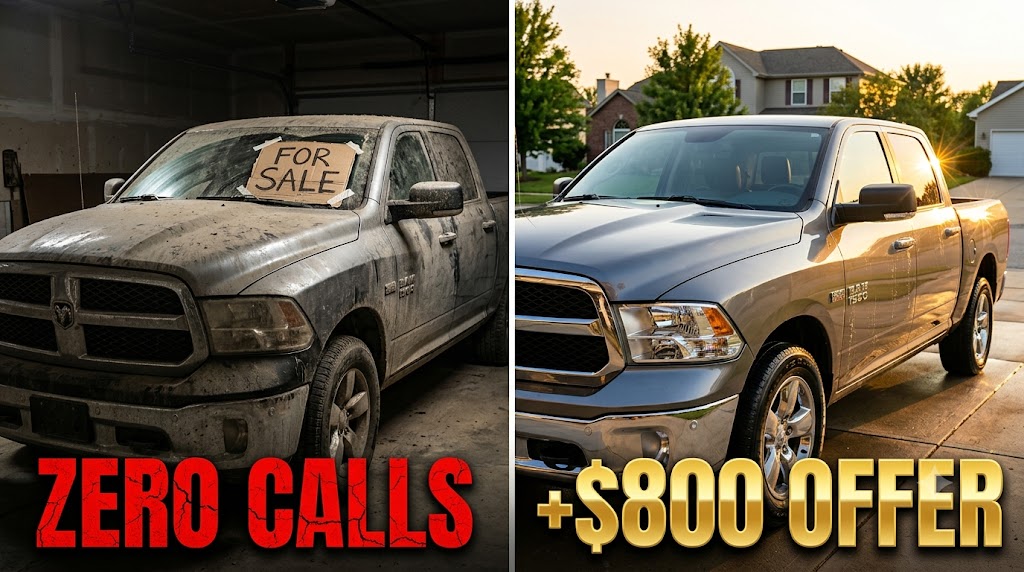
Used-car buyers shop with their thumbs. On Craigslist, Facebook Marketplace, or Autotrader, they're comparing five or six listings at once — almost entirely by the photos. Before anyone asks about the engine or the maintenance records, they've already formed an opinion from the paint and the interior. A dirty car in the photos says one thing: neglect. Even if the mechanicals are flawless, that first impression costs you. Fewer messages, fewer showings, and the buyers who do reach out come in swinging with lowball offers, "discounting" the wear they think they saw.
Here's the good news. Getting a car ready to sell doesn't require a professional detail shop. It requires doing the right things, in the right order, one time — before you take a single photo.
The checklist before you photograph anything
Why it's worth a weekend of your time
A full professional detail runs $150–400 in most of the US, and high-end shops charge well past that. If your only goal is to sell the car faster, you don't need to spend it. What actually moves the needle in a listing is the gap between "looks new" and "looks used" — and that gap closes with a thorough wash and attention to the handful of things buyers notice first. Not with machine polishing.
The math is simple. Maybe $40 in supplies — car wash soap, an all-purpose interior cleaner, glass cleaner, tire shine, a few microfiber towels — plus one Saturday. Against that, a clean, well-photographed car gets more replies, sells faster, and gives buyers less ammunition to negotiate the price down. On a $10,000 car, defending even 3% of your asking price is $300. That's real money for a weekend's work.
What's not worth your time
Skip paint correction, ceramic coating, and swirl-mark removal. Those are $500-plus jobs that make sense for a car you're keeping, not one you're selling next month — you won't recoup the cost on an ordinary used car. Same goes for chasing every rock chip and door ding. Buyers of a ten-year-old car expect age. What they punish is dirt, smell, and signs of carelessness, because those hint at how the car was treated everywhere they can't see.
The order that matters
Work outside-in and top-down. Wheels and tires first, since they throw the dirtiest water. Then the paint, roof to rocker panels. Glass last, inside and out — the inside of the windshield collects a hazy film most owners never notice, and it shows up badly in photos taken through the glass. Move to the interior: trash out, vacuum, surfaces, then odor. Let everything dry completely, park the car in good light the next morning, and take your photos before it collects a day of dust.
One pass, done in the right sequence, and your listing stops saying "used car, make me an offer" and starts saying "cared for, priced as listed." That shift is where the hundreds of dollars live.
Free tool: Tire Size Calculator
Thinking about new wheels or tires? Compare any two tire sizes and see the real difference in diameter, speedometer error, and fitment — instantly.
Open the calculator →